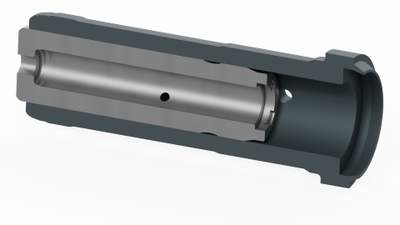
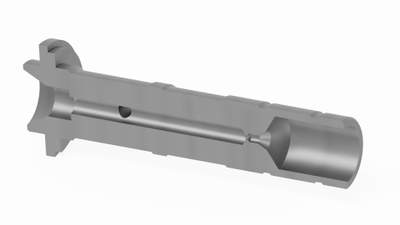
Anyone requesting CNC-turned parts primarily wants one thing: a fast and reliable response regarding price, lead time and manufacturability. In a highly competitive market, every day counts. However, only a complete inquiry enables us at mesa parts to prepare a fast and precise quotation that provides you with a reliable basis for decision-making.
To prevent valuable time from being lost through follow-up questions, we have compiled the seven most important pieces of information that should be included when requesting precision-turned parts. This checklist serves as a practical guide for purchasers and engineers, helping to ensure efficient communication right from the start.
1. Technical Drawing: The Basis for Your CNC-Turned Part
The technical drawing remains the most important basis for calculating any quotation. A complete, standards-compliant 2D drawing is essential, as it clearly defines all relevant dimensions, tolerances, surface finishes and other requirements. It is the “language” shared between your design department and our manufacturing team.
To accelerate the process even further, a 3D model in STEP format is ideal. It supports our technical review, helps with the automated creation of manufacturing programs and enables a faster and more precise assessment of manufacturability.
Without a precise technical drawing, an exact calculation is not possible. In the worst-case scenario, time-consuming follow-up questions may delay the entire process.
2. Material & Requirements: The Right Material for Your Component
Immediately after the geometry, we need clear information about the material and all additional requirements the component must meet. Vague specifications inevitably lead to assumptions that may have to be corrected later.
This may include, for example:
- Clear material designations, such as 1.4301 instead of simply “stainless steel”
- Specific material standards or specifications
- Hardening requirements, including exact target values
- Coating requirements, including the process and coating thickness
- Preferred suppliers for external processes
- Requirements for labeling or special markings
The more precise this information is, the more reliably we can assess the manufacturing effort for your individual turned parts.
3. Quantities: From Production-Ready Prototypes to Call-Off Orders
The requested quantity has a significant impact on the manufacturing strategy, tooling concept and final calculation. A clear indication of the required quantities is therefore essential.
It is particularly important to distinguish between:
- Samples for series approval
- The actual series requirement
- Potential call-off quantities from a framework agreement
The quantity determines which machine is the most economical option for manufacturing the part and how tooling costs can be allocated. Precise quantity information enables us to select the most suitable and cost-efficient manufacturing concept for your CNC-turned parts from the outset.
4. Your Timeline: When Do You Need the CNC-Turned Parts?
Not every inquiry is at the same stage of a project. Information about your timeline helps us tailor the scope of the quotation process to your requirements.
If a project is already close to the awarding decision, a detailed Design for Manufacturing assessment may be useful.
Helpful information may include:
- The planned SOP date
- A requested date for sample parts
- The current project status, such as a budgetary inquiry or an inquiry shortly before awarding
- Your internal quotation deadline
With this information, we can process your inquiry in a targeted manner and set the right priorities.
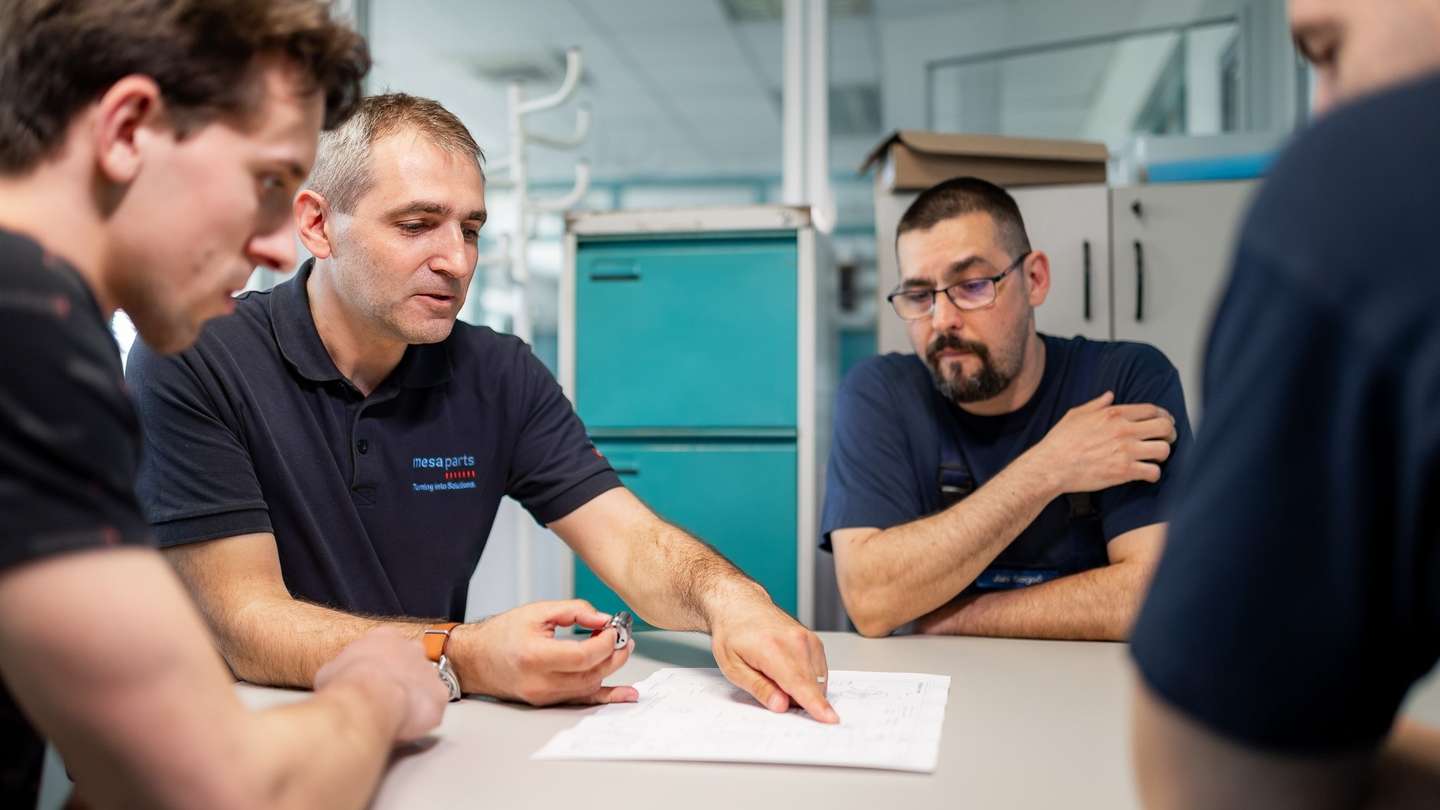
Even the best-prepared inquiry may lead to follow-up questions. To resolve these quickly and directly, you should name both a commercial and a technical contact, including their direct contact details.
At mesa parts, we follow the “One Face to the Customer” principle: your personal contact coordinates all internal communication for you and is available to support you throughout the process.
Direct communication channels ensure that your quotation for custom CNC-turned parts can be prepared efficiently without losing time in internal coordination loops.
6. Logistics and Delivery: Defining the Framework Conditions
Logistical requirements are also an important part of a complete inquiry, as they can influence the total costs. The earlier this information is available, the more accurately we can calculate the organizational effort and associated costs.
This may include:
- Specific packaging requirements
- The exact delivery address
- Desired Incoterms
- Your preferred payment terms
7. The Application: Where Will Your Turned Parts Be Used?
The better we understand the application of a component, the more thoroughly we can assess its technical requirements. Information about the component’s function, assembly or end use often provides our experts with valuable insights.
Understanding the broader context enables us to contribute our expertise as a partner through co-engineering, identify potential manufacturing improvements and help ensure the best technical design for your CNC-turned parts.
Conclusion: A Complete Inquiry Saves Time for Everyone
A carefully prepared and complete inquiry is the fastest way to receive a reliable quotation. Technical drawings, clear material specifications, defined quantities and the most important project information provide the basis for fast and efficient quotation processing.
If these seven points are included from the outset, we at mesa parts can assess your project more quickly and provide the right quotation for your CNC-turned parts manufactured to drawing.
Do you have a current project or would you like advice on the possibilities of series production? Contact us. Our team looks forward to receiving your inquiry.
 Design for Manufacturing: 5 Ways to Reduce Turned Part Costs Before Serial Production